
According to the police, the entire Kartavya Path area has been placed under constant electronic surveillance through an extensive network of CCTV cameras integrated with advanced facial recognition system (FRS) technology.
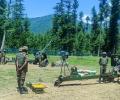
'India's security challenges are no longer confined to the Line of Control or the Line of Actual Control.'
'They also span cyber networks, economic systems, information warfare, technology ecosystems, maritime routes, and internal social cohesion.'

A new report highlights India's increasing vulnerability to cyberattacks and CBRN threats due to geopolitical tensions, industrial growth, and urbanisation, calling for an urgent strengthening of its CBRN security strategy through collaboration and investment.

The Indian armed forces will conduct an exercise to test the capabilities of its drones and counter-drone systems. The exercise, named 'Cold Start', will involve all three services and will take place in Madhya Pradesh.

India has strongly criticised Pakistan at the UN Security Council, highlighting civilian deaths and injuries in Afghanistan caused by cross-border violence by Pakistani military forces, accusing Pakistan of 'heinous acts' and 'systematic genocide'.

The Chinese military is planning to revamp its English-language instruction in its academies to improve graduates' communication skills on the international stage, according to an article by senior lecturers from the People's Liberation Army (PLA).

'India's ties with Israel have to do with defence and general technology.' 'The war changes nothing in what India and Israel hope to get from the relationship.' 'It's not as though India will get significantly more benefits from Iran if India abandons Israel at this time.'
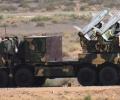
India's defence sector is on the cusp of a 'super cycle' of growth, driven by escalating geopolitical conflicts and a strong policy push towards indigenous manufacturing, with major players like BEL, HAL, and BDL poised for significant order inflows and technological advancements.
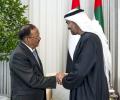
India is the only significant power that all parties trust, or at least do not distrust, notes former defence secretary Ajay Kumar.

The Islamic Revolutionary Guard Corps (IRGC) has declared the commencement of its 27th offensive under Operation True Promise 4, targeting American and Israeli positions in response to what it termed a new wave of 'unprovoked US-Israeli aggression against the Islamic Republic', Iranian state broadcaster Press TV reported.
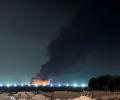
The IRGC said the barrage targeted several US military facilities in the region, including bases at Sheikh Isa in Bahrain, Juffair in Bahrain, Ali al-Salem in Kuwait and Al Azraq in Jordan.

The operation reportedly extended to American assets, with the IRGC claiming that "US military bases in the region, namely Ali al-Salem in Kuwait, as well as al-Minhad and al-Dhafra in the United Arab Emirates, were also targeted."

The Quad grouping has expanded cooperation in critical minerals and energy, while unveiling new measures to boost maritime surveillance and port infrastructure across the Indo-Pacific. This move comes against the backdrop of China's growing military posturing in the region, with ministers reiterating strong opposition to destabilising actions and expressing serious concerns over militarisation of disputed features.

A digital profiling exercise by the Delhi government has revealed significant infrastructure deficiencies in government schools, including shortages of drinking water taps, lack of facilities for children with special needs, and structurally unsafe buildings.

Microsoft founder Bill Gates is scheduled to visit Amaravati to discuss expanding cooperation with Andhra Pradesh in health and artificial intelligence initiatives with Chief Minister N Chandrababu Naidu.
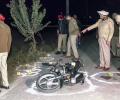
Punjab Police have busted two ISI-backed espionage modules using high-tech, China-made solar powered CCTV cameras to transmit live feeds of sensitive military locations to Pakistan-based handlers.
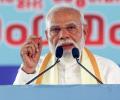
Prime Minister Narendra Modi criticised the Congress party and Rahul Gandhi during a rally in Kochi, Kerala, accusing them of being unaware of India's development and playing politics over the West Asia crisis. He urged voters to end the alternating rule of LDF and UDF governments and give the BJP-led NDA a chance to govern the state.

Ahmedabad police have announced comprehensive security measures for the India-New Zealand T20 World Cup final, including over 3,000 police personnel, home guards, and anti-drone systems.

'There are certain sovereign AI domains where we must build capabilities using our own data, our own language models, and make our own attempts at global models.'

Delhi LG Taranjit Singh Sandhu addressed the Global Confluence 2026, emphasising the importance of maintaining a human element at the heart of digital nation-building. He highlighted India's digital transformation and the role of technology in improving lives, while urging a focus on inclusive development and national security.
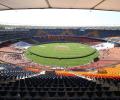
Ahmedabad police have announced comprehensive security measures for the India-New Zealand T20 World Cup final, including over 3,000 police personnel, home guards, and anti-drone systems.
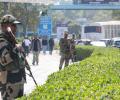
Over 4,000 AI-enabled cameras and 15,000 security personnel are deployed for the India AI Impact Summit 2026 at Bharat Mandapam, ensuring high-level security and surveillance.

On the first anniversary of Operation Sindoor, the Indian military issued a stern warning to Pakistan, stating that no terror sanctuary across the border is safe and that India will continue to dismantle terrorist infrastructure.

Even as sectors across India embrace technological transformation, the construction side of the real estate industry continues to trail global trends. While technologies like Building Information Modelling (BIM), 3D printing, drone surveillance, and IoT-enabled smart building systems are increasingly common overseas, their adoption in Indian construction remains limited and largely experimental, developers said.

Police in Chhattisgarh's Raigarh district have uncovered illegal opium cultivation in a village, marking the fifth such instance in the past 18 days. Two individuals have been arrested in connection with the illegal activity, which was discovered through drone surveillance.
Even as the benchmark and broader indices were down sharply on Monday due to escalating tensions in West Asia, the Nifty Defence index ended the session in the green.
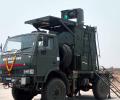
'DRDO is working on a number of technologies that will give India Star Wars capability.'

'From our survey we found that there was a problem in the agricultural sector and drones could solve the problem.'

'After we were alerted about the war, none of us could sleep for the next two nights while sailing through those waters.'

The Bhairav Battalion is positioned between the Para Special Forces and regular infantry units to meet modern warfare requirements, especially in view of drone-intensive warfare.
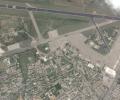
The Pakistani government has once again found itself embarrassed on the world stage, now acknowledging the impact of India's strategic and precision strikes on its military installation during the escalation in May, following Operation Sindoor, which came in retaliation for the April 22 Pahalgam terror attack that killed 26 civilians.
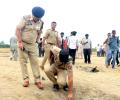
Indian Armed Forces brought down a number of these drones using kinetic and non-kinetic means.

'Candidates will receive hands-on training in drone piloting, maintenance, data analysis, and regulatory compliance.'

'TTP has vowed to take revenge for the attacks that Pakistan is carrying out against Afghanistan.' 'To diminish this threat, Pakistan is hitting Afghanistan hard.'

A Delhi court has granted the National Investigation Agency (NIA) 11-day custody of several foreign nationals accused of training Myanmar-based Ethnic Armed Groups (EAGs) known to support insurgent groups in India.
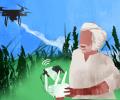
The government has extended the interim approval given to plant protection companies for use of drones for spraying specified pesticides. The approval has been extended for one more year starting from April 18, 2024. All other terms and conditions for the use of drones for spraying plant protection chemicals including the standard operating procedures etc. will remain the same.
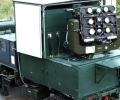
Success has put India in the exclusive and limited club of nations that possess the high-power Laser-DEW.

AI reduces the time taken to find a target and launch a strike. This has led to a major increase in the pace of the conflict, with one report mentioning nearly 900 strikes launched on Iranian targets in the first 12 hours of an operation.
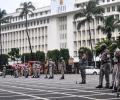
The Maharashtra Police are drafting a drone-use policy to strengthen security and surveillance in key cities, including Mumbai, as part of preparations against unconventional terror threats, a senior official said on Wednesday.
The policy unveiled by the home ministry is based on seven key pillars to counter the terror threats emanating from India or abroad -- prevention, responses, aggregating internal capacities, human rights and "Rule of Law"-based processes.
